1. Fundamentals of Installments
Every installment problem is built around a few core financial terms and a single fundamental logic: money paid earlier carries interest value, and unpaid debt accumulates interest.
Key Terms You Must Know
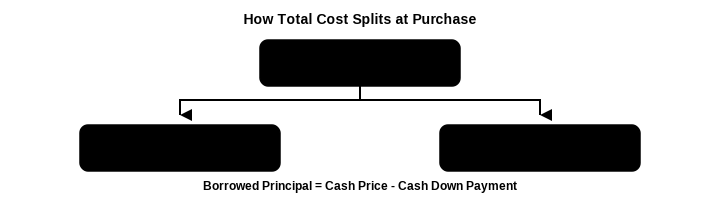
- Cash Price: The original, outright price of the item if you pay 100% upfront on the spot.
- Cash Down Payment: The immediate initial amount paid at the time of purchase.
- Borrowed Principal (Loan Amount): The actual debt on day one.
Borrowed Principal = Cash Price - Cash Down Payment - Installment Amount (x): The fixed periodic payment made (monthly, quarterly, or annually).
- Number of Installments (n): How many times the installment is paid.
- Rate of Interest (R): The annual percentage rate charged by the lender.
- Due Debt (Maturity Amount): The future accumulated amount of money (Principal + Total Interest) owed if zero payments were made until the final deadline.
The Underlying Logic: Why Formulae Differ
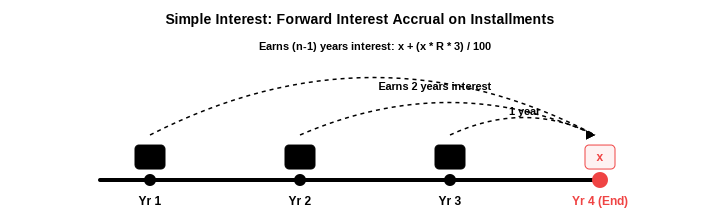
- In Simple Interest (SI): Borrowers either pay periodic sums to settle an accumulating future debt, or they pay monthly installments on a reducing balance. Each early installment essentially saves or earns interest until the loan duration ends.
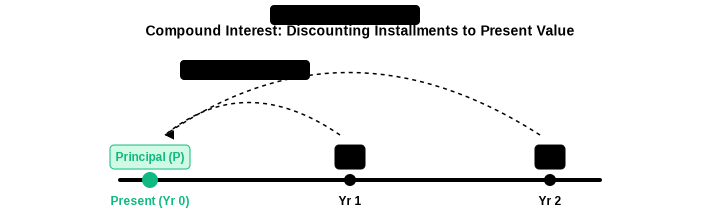
- In Compound Interest (CI): Every installment is discounted back to its Present Value (PV). The sum of the present values of all future installments must equal the borrowed principal.