Sentence Rearrangement: Complete Concept Guide & Exam Rules
Sentence Rearrangement (Para Jumbles) rewards logical structure over guesswork. Learn the Mandatory Pair Linking Engine, Opener/Closer signals, and S1-S6 bridge strategy with 3 visual diagrams and 35 solved MCQs.
1. The Mandatory Pair Linking Engine (Solve Para Jumbles in 30 Seconds)
Sentence Rearrangement (also called Para Jumbles or P-Q-R-S) appears in every SSC CGL, IBPS PO, SBI PO, CDS, and CAT exam. Never try to arrange all 4–6 sentences in your head at once! Instead, hunt for one or two Mandatory Pairs—two sentences that MUST sit immediately next to each other—and use them to eliminate 2 to 3 options instantly.

| Mandatory Pair Clue | Sentence 1 (Antecedent) | Sentence 2 (Dependent) |
|---|---|---|
| 1. Noun → Pronoun | Introduces a specific person, place, or thing ("Dr. Kalam inspired...") | Refers back using he, she, it, they, this, these, such ("He believed...") |
| 2. Full Name → Acronym / Surname | "The World Health Organization (WHO) released..." | "WHO further advised..." or "The agency warned..." |
| 3. Indefinite → Definite Article | First mention uses a / an ("A new metro corridor...") | Subsequent mention uses the ("The corridor will cut...") |
| 4. Chronological Sequence | Earlier year, stage, or cause ("In 1991, India opened...") | Later year, stage, or outcome ("By 2010, exports had...") |
| 5. Cause → Effect / Contrast | Makes a claim or states a cause ("Rainfall was 40% below normal.") | Starts with Therefore, Thus, Consequently, However, Yet |
2. Paragraph Architecture: Spotting Opener, Body & Closer Sentences
Every coherent paragraph follows a logical 3-part skeleton. Knowing which words disqualify a sentence from being the opener immediately narrows down the starting sentence.

3. S1-to-S6 Anchored Para Jumbles (SSC & CDS Pattern)
In SSC CGL Tier-II and CDS, you are often given a fixed opening sentence (S1) and a fixed closing sentence (S6), with four jumbled sentences (P, Q, R, S) in between. Use the dual-anchor bridge method:
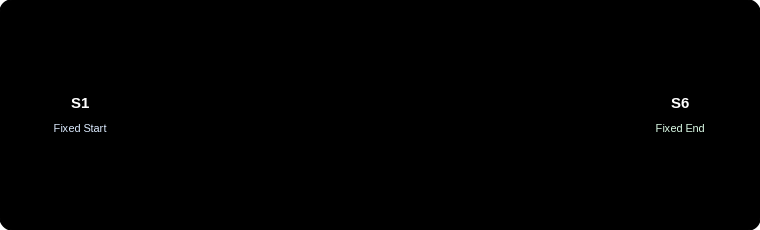
P. Consequently, battery prices plunged by nearly 80% over the decade.
Q. Global investment in lithium-ion manufacturing surged after 2012.
R. This affordability finally made electric cars competitive with petrol models.
S. Factories scaled up production and refined cell chemistry rapidly.
Solution (Q-S-P-R): Q is the independent opener (introduces topic + year 2012). S explains what factories did with that investment. P ("Consequently") gives the price drop result. R ("This affordability") refers directly back to "prices plunged" in P!
Frequently Asked Questions (Sentence Rearrangement)
Identify one guaranteed Mandatory Pair (like Noun-Pronoun or Acronym link) and check the 4 options. Usually only 1 or 2 options contain that pair—then verify the opener to finish in under 25 seconds.
Yes, if 'The' refers to a universally known unique entity ('The Reserve Bank of India', 'The Himalayas', 'The internet') or a general category ('The tiger is an apex predator'). It cannot open if it refers to a previously introduced specific item ('The policy failed').
Start by identifying the independent opener, then chain Mandatory Pairs using noun-pronoun links, article transitions (a -> the), and logical flow (General -> Specific -> Conclusion). Finally, read the entire sequence aloud mentally to check smooth transitions.
Ready to Test Your Mastery?
Attempt our expanded Sentence Rearrangement MCQ practice arena with difficulty filters, visual cheat sheets, and instant rule-based explanations.
Launch Sentence Rearrangement Practice Test →