Fundamentals of Logical Sequence
1. Core Concept
In logical sequence problems, you are usually given 4 to 6 terms. These terms are related by an underlying rule—such as how a plant grows, how an administrative office is structured, or how a manufacturing process unfolds. Your job is to identify that connection and place the items in the correct progression from start to finish (or occasionally from end to start).
2. Common Patterns and Relationships
Every logical sequence question falls into one of these fundamental dimensions:
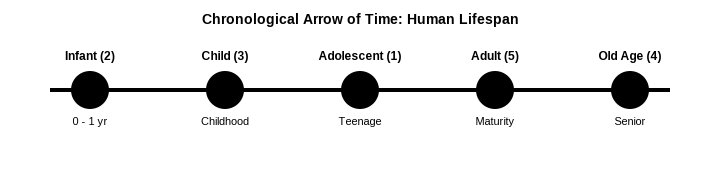
- •Time / Chronology: What occurs first in a lifespan, day, year, or history?
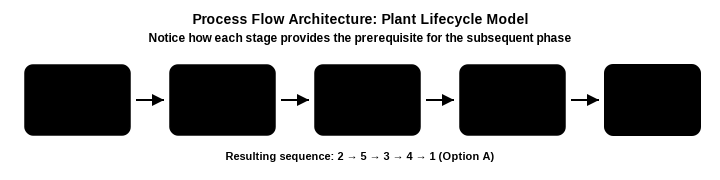
- •Process / Life Cycle: What is the step-by-step production method or biological cycle?
- •Hierarchy / Authority: What goes from the lowest rank to the highest rank (or vice versa)?
- •Spatial / Geographical Inclusion: What fits inside what (smaller boundary to larger boundary)?
- •Magnitude / Measurement: Ordering by size, weight, intensity, or digital units.
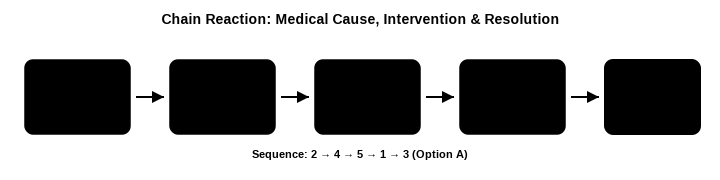
- •Cause, Effect, and Resolution: What problem happened, what action was taken, and what was the end result?
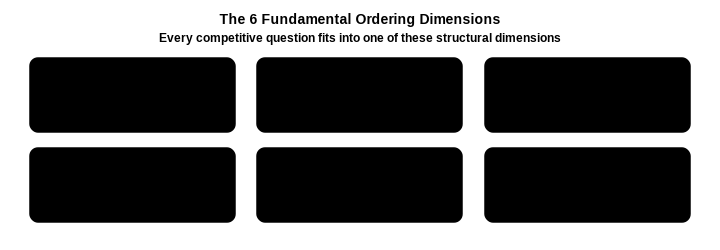
Diagram text
The 6 Fundamental Ordering Dimensions · Every competitive question fits into one of these structural dimensions
T · Time / Chronology · Age, Hours, Eras, History
P · Process & Life Cycle · Seed → Plant, Manufacturing
H · Hierarchy & Ranks · Captain → Colonel → General
S · Spatial Inclusion · Village → State → Continent
M · Magnitude / Units · Byte → KB → MB → GB
C · Cause & Resolution · Illness → Doctor → Recovery
3. Strategy to Solve Quickly
-
Find the Extremes (First and Last): Always identify either the very first stage (the origin/seed) or the final product/outcome.
-
Use Option Elimination: Once you find the first number (for example, item 3), look at the options. If only one or two options start with 3, eliminate all the others immediately.
-
Verify Direction (Ascending vs. Descending): Most questions follow an ascending order (smaller to larger, start to finish). If your ascending order is missing from the options, check whether the exact reverse (descending order) is available.
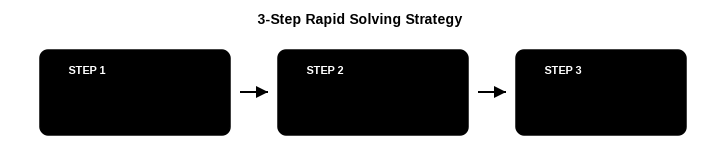
Diagram text
3-Step Rapid Solving Strategy
STEP 1 · Find Extremes · Lock in the First or Final item
STEP 2 · Option Elimination · Discard wrong prefixes instantly
STEP 3 · Verify Direction · Ascending or Descending
Major Types of Logical Sequences
Five primary types appear consistently in reasoning material:
- Process and Production Sequence (Step-by-Step Procedures & Life Cycles)
- Chronological / Time-Based Sequence (Ages, Routine, and Historical Stages)
- Hierarchical and Spatial Sequence (Administrative Ranks & Geographical Containment)
- Size, Magnitude, and Measurement Sequence (Quantities, Units, and Physical Dimensions)
- Cause, Effect, and Problem-Solving Sequence (Action, Incident, and Resolution)