Seating Arrangement is a core topic in Logical Reasoning where a set of persons or objects must be placed into specific geometric configurations (such as a straight line, two parallel lines, a circle, a square, or a rectangle) based on a given set of conditions and relative position clues.
1. Fundamentals of Seating Arrangement
To solve any seating arrangement problem accurately, you need to master three fundamental pillars: Direction Rules, Keyword Interpretation, and the Systematic Solving Approach.
A. Direction and Hand Orientation Rules
The most common point of confusion is determining which way is "Left" and which way is "Right". Your reference changes based on which way the person is facing.
1. Straight Line (Linear)
Facing North (Upward):
Your Right is their Right.
Your Left is their Left.
Facing South (Downward):
Everything is reversed.
Your Right becomes their Left.
Your Left becomes their Right.
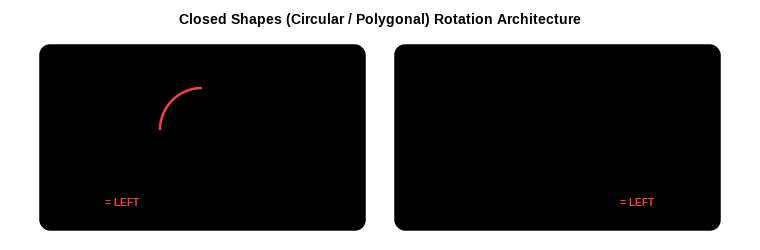
2. Closed Shapes (Circles, Squares, Rectangles)
Facing the Centre (Inside):
Moving Clockwise = Moving to the Left.
Moving Anti-Clockwise = Moving to the Right.
Facing Away from the Centre (Outside):
Moving Clockwise = Moving to the Right.
Moving Anti-Clockwise = Moving to the Left.
B. Standard Keywords and Phrasing
Competitive exam problems use specific phrases that have exact mathematical and logical meanings:
Phrase
Exact Logical Meaning
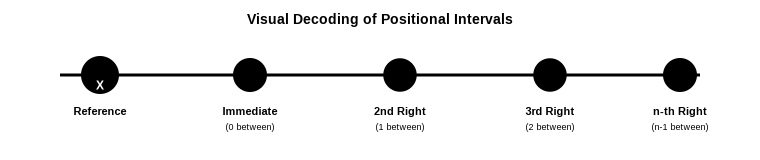
Immediate Left / Immediate Right
Sitting right next to each other with 0 people in between (distance = 1 seat).
Second to the Left / Right
Exactly 1 person sits between them.
Third to the Left / Right
Exactly 2 people sit between them.
n-th to the Left / Right
Exactly (n - 1) people sit between them.
Opposite to
In an even-numbered circle or polygon (e.g., 6 or 8 people), sitting directly across the diameter. In an 8-person circle, two opposite people have exactly 3 persons on either side. In a 6-person circle, they have 2 persons on either side.
Extreme Ends
The very first seat on the far left or the very last seat on the far right of a row.
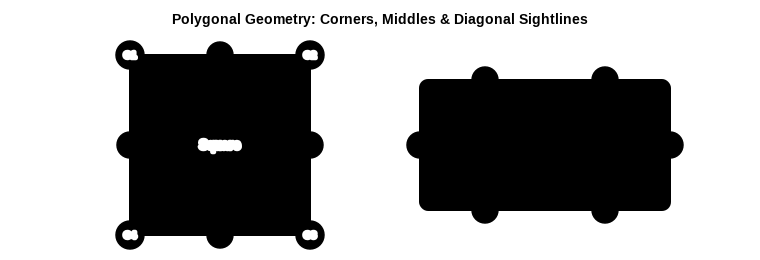
Diagonally Opposite
In squares and rectangles, sitting at opposite corners connected by an internal diagonal.
Connecting Conjunctions: "And" vs. "Who"
This is the single most tested distinction in reasoning questions:
"And", "But", "While": Refers back to the first person mentioned (the main subject).
Example: "A sits second to the left of B and third to the right of C."
Meaning: A sits second to the left of B, and A sits third to the right of C.
"Who", "Whom", "Which": Refers to the immediately preceding person (the neighbor).
Example: "A sits second to the left of B, who sits third to the right of C."
Meaning: A sits second to the left of B, but B sits third to the right of C.
C. The 4-Step Solving Method
Draw the Framework: Count the total number of seats and sketch the basic outline (a row with numbered slots, or a circle/polygon with tick marks).
Start with Definite Clues: Look for clues that fix a position permanently (e.g., "P sits at an extreme end", "Q sits in the exact middle", "R sits at a corner facing inside").
Link Relative Clues: Find clues that mention the persons you have already placed.
Use Parallel Cases (Possibility Diagrams): If a clue offers two possible locations, sketch two parallel cases. As you read further clues, the invalid case will violate a condition and get eliminated.
2. The 4 Primary Types of Seating Arrangement
The four configurations most commonly featured in reasoning books are:
Linear Seating Arrangement (Single Row)
Parallel Row Seating Arrangement (Double Rows Facing Each Other)
Circular Seating Arrangement
Square and Rectangular Seating Arrangement
Type 1: Linear Seating Arrangement (Single Row)
In this type, people sit in a single horizontal straight line. They may all face North, all face South, or face mixed directions.
Example 1.1 (5 Persons Facing North)
Problem: Five friends A, B, C, D, and E sit in a straight line facing North.
B sits at the extreme left end of the row.
A sits second to the right of B.
E sits between B and A.
C sits to the immediate left of D.
Question: Who sits at the extreme right end of the row?
Step-by-Step Solution:
Number the positions 1 to 5 from left to right. Since all face North, right is toward position 5, and left is toward position 1.
"B sits at the extreme left end": Place B at position 1.
"A sits second to the right of B": Position 1 + 2 = Position 3. Place A at position 3.
"E sits between B and A": Position 2 must be E.
Row so far: 1: B, 2: E, 3: A, 4: [ ], 5: [ ].
"C sits to the immediate left of D": Positions 4 and 5 are empty. For C to be to the immediate left of D, C must be at position 4 and D at position 5.
Final Order (Left to Right): B, E, A, C, D
Answer: D sits at the extreme right end.
Example 1.2 (6 Persons Facing North)
Problem: Six persons P, Q, R, S, T, and U sit in a straight line facing North.
Q sits second from the left end of the row.
R sits to the immediate left of Q.
P sits second to the right of Q.
U sits between Q and P.
T sits at the extreme right end of the row.
S occupies the remaining seat.
Question: Who sits to the immediate right of P?
Step-by-Step Solution:
Number positions 1 to 6 from left to right.
"Q sits second from the left end": Place Q at position 2.
"R sits to the immediate left of Q": Place R at position 1.
"P sits second to the right of Q": Position 2 + 2 = Position 4. Place P at position 4.
"U sits between Q and P": Position 3 must be U.
"T sits at the extreme right end": Place T at position 6.
"S occupies the remaining seat": Position 5 must be S.
Final Order (Left to Right): R, Q, U, P, S, T
Answer: S sits to the immediate right of P.
Example 1.3 (6 Persons Facing South)
Problem: Six friends A, B, C, D, E, and F sit in a straight line facing South.
C sits at the extreme right end of the row.
B sits third to the left of C.
A sits to the immediate right of B.
E sits between C and A.
F sits at the extreme left end of the row.
D occupies the remaining seat.
Question: Who sits second to the left of A?
Step-by-Step Solution:
Number positions 1 to 6 from left to right on paper.
Facing South reverses left and right:
Position 1 is the Extreme Right End.
Position 6 is the Extreme Left End.
Moving to someone's Left means moving toward position 6.
Moving to someone's Right means moving toward position 1.
"C sits at the extreme right end": Place C at position 1.
"B sits third to the left of C": From position 1, move 3 spots toward position 6 -> 1 + 3 = Position 4. Place B at position 4.
"A sits to the immediate right of B": For someone facing South, moving right means moving toward position 1 -> Position 4 - 1 = Position 3. Place A at position 3.
"E sits between C and A": Position 2 is between 1 and 3. Place E at position 2.
"F sits at the extreme left end": Place F at position 6.
"D occupies the remaining seat": Place D at position 5.
Final Order on paper (Positions 1 to 6): C, E, A, B, D, F
Second to the left of A (Position 3): Since A faces South, move 2 spots toward position 6 -> Position 3 + 2 = Position 5.
Answer: D sits second to the left of A.
Example 1.4 (7 Persons Facing North)
Problem: Seven persons M, N, O, P, Q, R, and S sit in a row facing North.
P sits in the exact middle of the row.
N sits at the extreme left end of the row.
Q sits to the immediate right of N.
S sits at the extreme right end of the row.
O sits second to the left of S.
R sits between O and S.
M occupies the remaining seat.
Question: How many persons sit between M and R?
Step-by-Step Solution:
Number positions 1 to 7 from left to right.
"P sits in the exact middle": The middle of 7 seats is position 4. Place P at position 4.
"N sits at the extreme left end": Place N at position 1.
"Q sits to the immediate right of N": Place Q at position 2.
"S sits at the extreme right end": Place S at position 7.
"O sits second to the left of S": Position 7 - 2 = Position 5. Place O at position 5.
"R sits between O and S": Position 6 is between 5 and 7. Place R at position 6.
"M occupies the remaining seat": Position 3 is empty. Place M at position 3.
Final Order (Left to Right): N, Q, M, P, O, R, S
M is at position 3 and R is at position 6. The persons sitting between them are at positions 4 and 5 (P and O).
Answer: Exactly 2 persons sit between M and R.
Example 1.5 (6 Persons with Mixed Directions)
Problem: Six persons A, B, C, D, E, and F sit in a row. Three face North and three face South.
A sits at the extreme left end of the row and faces North.
B sits third to the right of A and faces South.
C sits to the immediate left of B and faces North.
D sits to the immediate right of C and faces South.
E sits second to the right of A and faces South.
F occupies the remaining seat and faces North.
Question: Who sits second to the left of E?
Step-by-Step Solution:
Number positions 1 to 6 from left to right.
"A sits at position 1 and faces North": Since A faces North, A's right is toward position 6.
"B sits third to the right of A": Position 1 + 3 = Position 4. Place B at position 4 (Facing South).
"C sits to the immediate left of B": B is at position 4 facing South. For someone facing South, left is toward position 6 -> Position 4 + 1 = Position 5. Place C at position 5 (Facing North).
"D sits to the immediate right of C": C is at position 5 facing North. For someone facing North, right is toward position 6 -> Position 5 + 1 = Position 6. Place D at position 6 (Facing South).
"E sits second to the right of A": Position 1 + 2 = Position 3. Place E at position 3 (Facing South).
"F occupies the remaining seat": Place F at position 2 (Facing North).
Check directions: North = A, F, C (3 persons). South = E, B, D (3 persons). Condition satisfied.
Final Order:
Pos 1: A (North)
Pos 2: F (North)
Pos 3: E (South)
Pos 4: B (South)
Pos 5: C (North)
Pos 6: D (South)
Question asks: Who sits second to the left of E?
E is at position 3 and faces South.
For someone facing South, left is toward position 6.
Two spots to the left of position 3 = Position 3 + 2 = Position 5.
Answer: C sits second to the left of E.
Type 2: Parallel Row Seating Arrangement (Two Rows Facing Each Other)
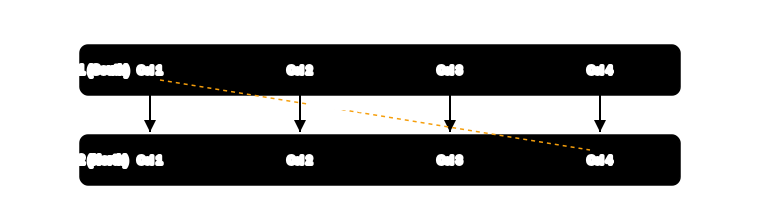
In this format, two rows of equal numbers of people sit opposite one another:
Row 1 faces South. (Left is toward your right; Right is toward your left).
Row 2 faces North. (Left is toward your left; Right is toward your right).
Each person in Row 1 directly faces one person in Row 2.
Example 2.1 (8 Persons, 4 in Each Row)
Problem: Eight persons sit in two parallel rows.
Row 1 (facing South): A, B, C, D.
Row 2 (facing North): P, Q, R, S.
P sits at the extreme left end of Row 2.
The person facing P sits to the immediate right of C.
S sits at the extreme right end of Row 2.
A faces S.
Q sits to the immediate right of P.
R occupies the remaining seat in Row 2, and B occupies the remaining seat in Row 1.
Question: Who sits opposite to B?
Step-by-Step Solution:
Number columns 1 to 4 from left to right.
In Row 2 (facing North):
Extreme left end is Column 1 -> Place P at Row 2, Column 1.
Extreme right end is Column 4 -> Place S at Row 2, Column 4.
"Q sits to the immediate right of P" -> Place Q at Row 2, Column 2.
Remaining seat for R -> Place R at Row 2, Column 3.
Row 2 is complete: P (Col 1), Q (Col 2), R (Col 3), S (Col 4).
In Row 1 (facing South):
"The person facing P sits to the immediate right of C": Person facing P is at Column 1. In Row 1 (facing South), moving right means moving toward Column 1. Therefore, C must be at Column 2, placing Column 1 to C's immediate right.
Since Column 1 is to the immediate right of C, and A faces S (Column 4), the remaining positions for Row 1 are Column 1 and Column 3.
A is at Column 4. C is at Column 2.
Person facing P is at Column 1 -> This must be D.
Place B in the remaining seat at Column 3.
Row 1 is complete: D (Col 1), C (Col 2), B (Col 3), A (Col 4).
B is in Column 3. The person facing B in Row 2 is R (Column 3).
Answer: R sits opposite to B.
Example 2.2 (10 Persons, 5 in Each Row)
Problem: Ten persons sit in two parallel rows.
Row 1 (facing South): P, Q, R, S, T.
Row 2 (facing North): A, B, C, D, E.
C sits in the exact middle of Row 2 and faces R.
B sits at the extreme left end of Row 2.
T sits opposite to B.
P sits to the immediate left of T.
S sits at the extreme left end of Row 1.
Q sits between R and S.
D sits at the extreme right end of Row 2.
A sits between B and C.
E occupies the remaining seat in Row 2.
Question: Who faces Q?
Step-by-Step Solution:
Number columns 1 to 5 from left to right.
Row 2 (facing North):
Middle seat is Column 3 -> Place C at Column 3.
Extreme left is Column 1 -> Place B at Column 1.
Extreme right is Column 5 -> Place D at Column 5.
"A sits between B and C" -> Place A at Column 2.
Remaining seat for E -> Place E at Column 4.
Row 2 Order (Cols 1 to 5): B, A, C, E, D.
Row 1 (facing South):
"C faces R" -> Place R at Column 3.
"T sits opposite to B" -> Place T at Column 1.
"P sits to the immediate left of T" -> T faces South, so left is toward Column 5. Column 1 + 1 = Column 2. Place P at Column 2.
"S sits at the extreme left end of Row 1" -> For someone facing South, extreme left is Column 5. Place S at Column 5.
"Q sits between R and S" -> Place Q at Column 4.
Row 1 Order (Cols 1 to 5): T, P, R, Q, S.
Q is at Column 4. The person opposite Q in Row 2 is E (Column 4).
Answer: E faces Q.
Example 2.3 (8 Persons with Positional Offsets)
Problem: Eight persons sit in two parallel rows.
Row 1 (facing South): J, K, L, M.
Row 2 (facing North): W, X, Y, Z.
X sits at the extreme right end of Row 2.
W sits second to the left of X.
The person facing W is L.
K sits to the immediate left of L.
J sits at the extreme left end of Row 1.
M occupies the remaining seat in Row 1.
Y sits to the immediate left of W.
Z occupies the remaining seat in Row 2.
Question: Who faces M?
Step-by-Step Solution:
Number columns 1 to 4 from left to right.
In Row 2 (facing North):
Extreme right end is Column 4 -> Place X at Column 4.
"W sits second to the left of X" -> Column 4 - 2 = Column 2. Place W at Column 2.
"Y sits to the immediate left of W" -> Column 2 - 1 = Column 1. Place Y at Column 1.
Place Z in the remaining seat at Column 3.
Row 2 Order (Cols 1 to 4): Y, W, Z, X.
In Row 1 (facing South):
"The person facing W is L" -> W is at Column 2, so place L at Column 2.
"K sits to the immediate left of L" -> L faces South, so left is toward Column 4. Column 2 + 1 = Column 3. Place K at Column 3.
"J sits at the extreme left end of Row 1" -> Facing South, extreme left is Column 4. Place J at Column 4.
Place M in the remaining seat at Column 1.
Row 1 Order (Cols 1 to 4): M, L, K, J.
M is at Column 1. The person facing M in Row 2 is Y (Column 1).
Answer: Y faces M.
Example 2.4 (6 Persons, 3 in Each Row)
Problem: Six persons sit in two parallel rows.
Row 1 (facing South): U, V, W.
Row 2 (facing North): X, Y, Z.
Y sits in the middle of Row 2.
V faces Y.
W sits to the immediate right of V.
U sits to the immediate left of V.
Z sits opposite to W.
X occupies the remaining seat in Row 2.
Question: Who sits diagonally opposite to W?
Step-by-Step Solution:
Number columns 1 to 3 from left to right.
"Y sits in the middle of Row 2": Place Y at Row 2, Column 2.
"V faces Y": Place V at Row 1, Column 2.
"W sits to the immediate right of V": V faces South, so moving right means moving toward Column 1. Place W at Row 1, Column 1.
"U sits to the immediate left of V": V faces South, so moving left means moving toward Column 3. Place U at Row 1, Column 3.
Row 1 Order (Cols 1 to 3): W, V, U.
"Z sits opposite to W": Place Z at Row 2, Column 1.
"X occupies the remaining seat in Row 2": Place X at Row 2, Column 3.
Row 2 Order (Cols 1 to 3): Z, Y, X.
Diagonally opposite:
W is at Row 1, Column 1 (top-left corner).
The diagonally opposite corner is Row 2, Column 3 (bottom-right corner), occupied by X.
Answer: X sits diagonally opposite to W.
Example 2.5 (8 Persons with Case Elimination)
Problem: Eight persons sit in two parallel rows.
Row 1 (facing South): A, B, C, D.
Row 2 (facing North): E, F, G, H.
H sits at the extreme left end of Row 2.
G sits second to the right of H.
A faces G.
C sits to the immediate left of A.
B sits at the extreme right end of Row 1.
D sits between B and A.
F sits at the extreme right end of Row 2.
E occupies the remaining seat in Row 2.
Question: Who sits opposite to D?
Step-by-Step Solution:
Number columns 1 to 4 from left to right.
In Row 2 (facing North):
"H sits at the extreme left end" -> Place H at Column 1.
"G sits second to the right of H" -> Column 1 + 2 = Column 3. Place G at Column 3.
"F sits at the extreme right end" -> Place F at Column 4.
Place E in the remaining seat at Column 2.
Row 2 Order (Cols 1 to 4): H, E, G, F.
In Row 1 (facing South):
"A faces G" -> G is at Column 3, so place A at Column 3.
"C sits to the immediate left of A" -> A faces South, so left is toward Column 4. Place C at Column 4.
"B sits at the extreme right end of Row 1" -> Facing South, extreme right is Column 1. Place B at Column 1.
"D sits between B and A" -> Place D at Column 2.
Row 1 Order (Cols 1 to 4): B, D, A, C.
D is at Column 2. The person facing D in Row 2 is E (Column 2).
Answer: E sits opposite to D.
Type 3: Circular Seating Arrangement
In a circle, there are no extreme ends. Movement is circular:
Facing the Centre:
Left = Clockwise
Right = Anti-Clockwise
Facing Outside:
Left = Anti-Clockwise
Right = Clockwise
Example 3.1 (6 Persons Facing Centre)
Problem: Six persons A, B, C, D, E, and F sit around a circular table facing the centre.
A sits opposite D.
E sits to the immediate left of A.
B sits to the immediate right of A.
C sits opposite B.
F occupies the remaining seat between D and B.
Question: Who sits to the immediate left of D?
Step-by-Step Solution:
Assign 6 positions numbered 1 to 6 in a Clockwise direction:
"P sits third to the left of S": Move 3 positions Clockwise from Pos 6 -> 6 + 3 = 9 -> Pos 1. Place P at Pos 1.
"T sits opposite P": Opposite Pos 1 is Pos 5. Place T at Pos 5.
"R sits second to the right of P": Move 2 positions Anti-Clockwise from Pos 1 -> 1 - 2 = Pos 7. Place R at Pos 7.
"V sits opposite R": Opposite Pos 7 is Pos 3. Place V at Pos 3.
"Q sits between P (Pos 1) and V (Pos 3)": Place Q at Pos 2.
"W sits to the immediate right of P": Anti-Clockwise from Pos 1 is Pos 8. Place W at Pos 8.
"U occupies the remaining seat": Place U at Pos 4.
Final Clockwise Arrangement: 1: P, 2: Q, 3: V, 4: U, 5: T, 6: S, 7: R, 8: W.
Question: Who sits opposite Q?
Q is at Pos 2. Opposite Pos 2 is Pos 6, which is S.
Answer: S sits opposite to Q.
Example 3.3 (6 Persons Facing Outside)
Problem: Six persons A, B, C, D, E, and F sit around a circular table facing away from the centre.
A sits opposite D.
B sits to the immediate right of A.
C sits third to the right of B.
E sits to the immediate left of D.
F occupies the remaining seat.
Question: Who sits to the immediate left of A?
Step-by-Step Solution:
Number positions 1 to 6 in a Clockwise order.
Since all face Outside (Away from the centre):
Right = Clockwise (+1)
Left = Anti-Clockwise (-1)
"A sits opposite D": Place A at Pos 1 and D at Pos 4.
"B sits to the immediate right of A": Move Clockwise (+1) from Pos 1 -> Pos 2. Place B at Pos 2.
"C sits third to the right of B": Move 3 spots Clockwise (+3) from Pos 2 -> 2 + 3 = Pos 5. Place C at Pos 5.
"E sits to the immediate left of D": D is at Pos 4. Left is Anti-Clockwise (-1) -> Pos 4 - 1 = Pos 3. Place E at Pos 3.
"F occupies the remaining seat": Pos 6 is empty. Place F at Pos 6.
Final Clockwise Arrangement: 1: A, 2: B, 3: E, 4: D, 5: C, 6: F.
Question: Who sits to the immediate left of A?
A is at Pos 1. Left is Anti-Clockwise (-1) -> Pos 6.
Answer: F sits to the immediate left of A.
Example 3.4 (8 Persons with Mixed Directions)
Problem: Eight persons P, Q, R, S, T, U, V, and W sit around a circular table.
P, R, T, and V face the Centre.
Q, S, U, and W face Outside.
P sits at Pos 1 and T sits opposite P.
Q sits to the immediate left of P.
R sits to the immediate right of Q.
S sits to the immediate left of R.
U sits opposite Q.
V sits to the immediate right of U.
W occupies the remaining seat.
Question: Who sits second to the left of W?
Step-by-Step Solution:
Number positions 1 to 8 Clockwise:
For Centre-facing: Left = Clockwise (+1), Right = Anti-Clockwise (-1).
For Outside-facing: Left = Anti-Clockwise (-1), Right = Clockwise (+1).
"P sits at Pos 1 (Centre) and T sits opposite P": Pos 1 = P (Centre), Pos 5 = T (Centre).
"Q sits to the immediate left of P": P faces the Centre, so left is Clockwise (+1) -> Pos 2. Place Q at Pos 2 (Outside).
"R sits to the immediate right of Q": Q faces Outside, so right is Clockwise (+1) -> Pos 2 + 1 = Pos 3. Place R at Pos 3 (Centre).
"S sits to the immediate left of R": R faces the Centre, so left is Clockwise (+1) -> Pos 3 + 1 = Pos 4. Place S at Pos 4 (Outside).
"U sits opposite Q": Q is at Pos 2, so opposite is Pos 6. Place U at Pos 6 (Outside).
"V sits to the immediate right of U": U faces Outside, so right is Clockwise (+1) -> Pos 6 + 1 = Pos 7. Place V at Pos 7 (Centre).
"W occupies the remaining seat": Place W at Pos 8 (Outside).
Final Clockwise Arrangement:
Pos 1: P (Centre)
Pos 2: Q (Outside)
Pos 3: R (Centre)
Pos 4: S (Outside)
Pos 5: T (Centre)
Pos 6: U (Outside)
Pos 7: V (Centre)
Pos 8: W (Outside)
Question: Who sits second to the left of W?
W is at Pos 8 and faces Outside.
For someone facing Outside, Left is Anti-Clockwise (-1).
Two spots Anti-Clockwise from Pos 8: Pos 8 - 2 = Pos 6.
Pos 6 is U.
Answer: U sits second to the left of W.
Example 3.5 (8 Persons Facing Centre with Seating Intervals)
Problem: Eight persons A, B, C, D, E, F, G, and H sit around a circular table facing the centre.
A sits at Pos 1.
A sits third to the right of B.
Exactly two persons sit between B and C (counting from B's left).
D sits to the immediate right of B.
E sits to the immediate left of B.
G sits between E and C.
H sits to the immediate right of A.
F occupies the remaining seat.
Question: Who sits opposite to D?
Step-by-Step Solution:
Number positions 1 to 8 Clockwise: Left = Clockwise (+1), Right = Anti-Clockwise (-1).
"A is at Pos 1" and "A sits third to the right of B":
For B facing the centre, right is Anti-Clockwise (-1).
If A is 3 spots Anti-Clockwise from B, then B must be 3 spots Clockwise (+3) from A.
1 + 3 = Pos 4. Place B at Pos 4.
"D sits to the immediate right of B": Right is Anti-Clockwise -> Pos 4 - 1 = Pos 3. Place D at Pos 3.
"E sits to the immediate left of B": Left is Clockwise -> Pos 4 + 1 = Pos 5. Place E at Pos 5.
"Exactly two persons sit between B and C (from B's left)":
Moving Clockwise from B (Pos 4): the two persons between them are Pos 5 and Pos 6.
Therefore, C must be at Pos 7. Place C at Pos 7.
"G sits between E (Pos 5) and C (Pos 7)": Place G at Pos 6.
"H sits to the immediate right of A": From Pos 1, Anti-Clockwise is Pos 8. Place H at Pos 8.
"F occupies the remaining seat": Pos 2 is empty. Place F at Pos 2.
Final Clockwise Arrangement: 1: A, 2: F, 3: D, 4: B, 5: E, 6: G, 7: C, 8: H.
Question: Who sits opposite to D?
D is at Pos 3. Opposite Pos 3 is Pos 3 + 4 = Pos 7. Pos 7 is C.
Answer: C sits opposite to D.
Type 4: Square and Rectangular Seating Arrangement
In square and rectangular arrangements, seats are classified into Corners and Middles of the sides.
Example 4.1 (8 Persons Around a Square Table, All Facing Centre)
Problem: Eight persons P, Q, R, S, T, U, V, and W sit around a square table facing the centre. Four sit at the corners and four in the middle of the four sides.
P sits at one of the corners.
T sits diagonally opposite to P.
Q sits to the immediate left of P.
R sits to the immediate left of Q.
S sits between R and T.
V sits diagonally opposite to R.
W sits between V and P.
U occupies the remaining seat between T and V.
Question: Who sits second to the right of T?
Step-by-Step Solution:
Number positions 1 to 8 Clockwise:
Corners: Positions 1, 3, 5, 7.
Middles of sides: Positions 2, 4, 6, 8.
All face the centre: Left is Clockwise (+1), Right is Anti-Clockwise (-1).
Diagonally opposite corners: (1, 5) and (3, 7).
"P sits at a corner": Place P at Pos 1.
"T sits diagonally opposite to P": Place T at Pos 5.
"Q sits to the immediate left of P": Left is Clockwise (+1) -> Pos 2. Place Q at Pos 2 (Middle).
"R sits to the immediate left of Q": Clockwise (+1) -> Pos 3. Place R at Pos 3 (Corner).
"S sits between R (Pos 3) and T (Pos 5)": Place S at Pos 4 (Middle).
"V sits diagonally opposite to R": Opposite Pos 3 is Pos 7. Place V at Pos 7 (Corner).
"W sits between V (Pos 7) and P (Pos 1)": Place W at Pos 8 (Middle).
"U occupies the remaining seat": Place U at Pos 6 (Middle).
Final Clockwise Arrangement: 1: P, 2: Q, 3: R, 4: S, 5: T, 6: U, 7: V, 8: W.
Question: Who sits second to the right of T?
T is at Pos 5. Right is Anti-Clockwise (-1).
Two spots Anti-Clockwise from Pos 5: Pos 5 - 2 = Pos 3.
Pos 3 is R.
Answer: R sits second to the right of T.
Example 4.2 (8 Persons, Corners Face Outside, Middles Face Inside)
Problem: Eight persons A, B, C, D, E, F, G, and H sit around a square table.
The four persons sitting at the corners face Outside.
The four persons sitting in the middle of the sides face Inside (Centre).
B sits in the middle of one of the sides.
C sits to the immediate left of B.
A sits to the immediate right of B.
D sits to the immediate right of C.
E sits diagonally opposite to A.
G sits diagonally opposite to C.
F sits between E and G.
H occupies the remaining seat.
Question: Who sits to the immediate left of E?
Step-by-Step Solution:
Number positions 1 to 8 Clockwise:
Corners (Face Outside): Positions 1, 3, 5, 7.
Middles (Face Inside): Positions 2, 4, 6, 8.
Middle rules (Face Inside): Left = Clockwise (+1), Right = Anti-Clockwise (-1).
Corner rules (Face Outside): Left = Anti-Clockwise (-1), Right = Clockwise (+1).
"B sits in the middle of one side": Place B at Pos 2 (Middle, faces Inside).
"C sits to the immediate left of B": B faces Inside, so left is Clockwise (+1) -> Pos 3. Place C at Pos 3 (Corner, faces Outside).
"A sits to the immediate right of B": B faces Inside, so right is Anti-Clockwise (-1) -> Pos 1. Place A at Pos 1 (Corner, faces Outside).
"D sits to the immediate right of C": C is at Pos 3 and faces Outside. For someone facing Outside, right is Clockwise (+1) -> Pos 3 + 1 = Pos 4. Place D at Pos 4 (Middle, faces Inside).
"E sits diagonally opposite to A": A is at Corner Pos 1, so place E at Corner Pos 5 (faces Outside).
"G sits diagonally opposite to C": C is at Corner Pos 3, so place G at Corner Pos 7 (faces Outside).
"F sits between E (Pos 5) and G (Pos 7)": Place F at Pos 6 (Middle, faces Inside).
"H occupies the remaining seat": Place H at Pos 8 (Middle, faces Inside).
Final Clockwise Arrangement: 1: A, 2: B, 3: C, 4: D, 5: E, 6: F, 7: G, 8: H.
Question: Who sits to the immediate left of E?
E is at Pos 5 (Corner) and faces Outside.
For someone facing Outside, Left is Anti-Clockwise (-1).
Pos 5 - 1 = Pos 4.
Pos 4 is D.
Answer: D sits to the immediate left of E.
Example 4.3 (6 Persons Around a Rectangular Table, Facing Centre)
Problem: Six persons M, N, O, P, Q, and R sit around a rectangular table facing the centre. Two persons sit on each longer side, and one person sits on each shorter side.
R sits on the shorter side on the left.
O sits on the shorter side opposite to R.
M sits to the immediate left of R on the longer side.
N sits to the immediate left of M on the same longer side.
P sits to the immediate left of O on the opposite longer side.
Q sits to the immediate left of P on the same longer side.
Question: Who sits directly opposite to M?
Step-by-Step Solution:
Map the 6 positions Clockwise around the rectangle:
Top Longer Side: Pos 1 (Left), Pos 2 (Right)
Right Shorter Side: Pos 3
Bottom Longer Side: Pos 4 (Right), Pos 5 (Left)
Left Shorter Side: Pos 6
All face the centre: Left is Clockwise (+1), Right is Anti-Clockwise (-1).
"R sits on the shorter side on the left": Place R at Pos 6.
"O sits on the shorter side opposite to R": Place O at Pos 3.
"M sits to the immediate left of R": Moving Clockwise (+1) from Pos 6 leads to Pos 1 on the top longer side. Place M at Pos 1.
"N sits to the immediate left of M on the same side": Moving Clockwise (+1) leads to Pos 2. Place N at Pos 2.
"P sits to the immediate left of O": Moving Clockwise (+1) from Pos 3 leads to Pos 4 on the bottom longer side. Place P at Pos 4.
"Q sits to the immediate left of P on the same side": Moving Clockwise (+1) leads to Pos 5. Place Q at Pos 5.
Final Clockwise Arrangement:
Top longer side: M (Pos 1), N (Pos 2)
Right shorter side: O (Pos 3)
Bottom longer side: P (Pos 4), Q (Pos 5)
Left shorter side: R (Pos 6)
Directly opposite across the table:
Top-left position (Pos 1, M) is directly parallel to Bottom-left position (Pos 5, Q).
Top-right position (Pos 2, N) is directly parallel to Bottom-right position (Pos 4, P).
Answer: Q sits directly opposite to M.
Example 4.4 (8 Persons, Corners Face Inside, Middles Face Outside)
Problem: Eight persons K, L, M, N, O, P, Q, and R sit around a square table.
Four persons at the corners face Inside.
Four persons in the middle of the sides face Outside.
K sits at Pos 1 (Corner).
O sits diagonally opposite to K.
L sits to the immediate left of K.
M sits to the immediate right of L.
Q sits diagonally opposite to M.
N sits between M and O.
P sits between O and Q.
R occupies the remaining seat.
Question: Who sits second to the left of L?
Step-by-Step Solution:
Number positions 1 to 8 Clockwise:
Corners (Face Inside): Positions 1, 3, 5, 7.
Middles (Face Outside): Positions 2, 4, 6, 8.
Corner rules (Face Inside): Left = Clockwise (+1), Right = Anti-Clockwise (-1).
Middle rules (Face Outside): Left = Anti-Clockwise (-1), Right = Clockwise (+1).
"K sits at Pos 1 (Corner)": Place K at Pos 1.
"O sits diagonally opposite to K": Place O at Pos 5 (Corner).
"L sits to the immediate left of K": K faces Inside, so left is Clockwise (+1) -> Pos 2. Place L at Pos 2 (Middle, faces Outside).
"M sits to the immediate right of L": L faces Outside, so right is Clockwise (+1) -> Pos 2 + 1 = Pos 3. Place M at Pos 3 (Corner, faces Inside).
"Q sits diagonally opposite to M": Place Q at Pos 7 (Corner).
"N sits between M (Pos 3) and O (Pos 5)": Place N at Pos 4 (Middle, faces Outside).
"P sits between O (Pos 5) and Q (Pos 7)": Place P at Pos 6 (Middle, faces Outside).
"R occupies the remaining seat": Place R at Pos 8 (Middle, faces Outside).
Final Clockwise Arrangement: 1: K, 2: L, 3: M, 4: N, 5: O, 6: P, 7: Q, 8: R.
Question: Who sits second to the left of L?
L is at Pos 2 (Middle) and faces Outside.
For someone facing Outside, Left is Anti-Clockwise (-1).
Two spots Anti-Clockwise from Pos 2: Pos 2 - 2 = Pos 8.
Pos 8 is R.
Answer: R sits second to the left of L.
Example 4.5 (8 Persons Around a Rectangular Table, Facing Centre)
Problem: Eight persons A, B, C, D, E, F, G, and H sit around a rectangular table facing the centre.
Three persons sit on each longer side, and one person sits on each shorter side.
H sits on the shorter side on the left.
D sits on the opposite shorter side.
B sits in the middle of the top longer side.
A sits to the immediate right of B.
C sits to the immediate left of B.
F sits in the middle of the bottom longer side, directly opposite to B.
E sits to the immediate left of D on the bottom longer side.
G occupies the remaining seat on the bottom longer side.
Question: Who sits directly opposite to A?
Step-by-Step Solution:
Number positions 1 to 8 Clockwise around the table:
All face the centre: Left is Clockwise (+1), Right is Anti-Clockwise (-1).
"H sits on the shorter side on the left": Place H at Pos 8.
"D sits on the opposite shorter side": Place D at Pos 4.
"B sits in the middle of the top longer side": Place B at Pos 2.
"A sits to the immediate right of B": Facing the centre from the top side means facing South. Right is toward the left of the paper -> Pos 1. Place A at Pos 1.
"C sits to the immediate left of B": Left is toward the right of the paper -> Pos 3. Place C at Pos 3.
"F sits in the middle of the bottom longer side": Place F at Pos 6.
"E sits to the immediate left of D": Clockwise from Pos 4 is Pos 5. Place E at Pos 5.
"G occupies the remaining seat": Pos 7 is empty. Place G at Pos 7.
Final Clockwise Layout:
Top longer side: A (Pos 1), B (Pos 2), C (Pos 3)
Right shorter side: D (Pos 4)
Bottom longer side: E (Pos 5), F (Pos 6), G (Pos 7)
Left shorter side: H (Pos 8)
Directly opposite pairs across the parallel longer sides:
Pos 1 (Top Left, A) is directly opposite to Pos 7 (Bottom Left, G).
Pos 2 (Top Middle, B) is directly opposite to Pos 6 (Bottom Middle, F).
Pos 3 (Top Right, C) is directly opposite to Pos 5 (Bottom Right, E).
Answer: G sits directly opposite to A.
Key Takeaway for Practice
Always draw a clean diagram first, identify whether persons face inside or outside, confirm whether connecting words mean the first person (and) or the immediate neighbor (who), and use numbered slots so you can verify each clue mathematically without second-guessing.
Ready to Test Your Speed?
Put your seating arrangement identification skills and step-by-step clues to the test with real exam drills.