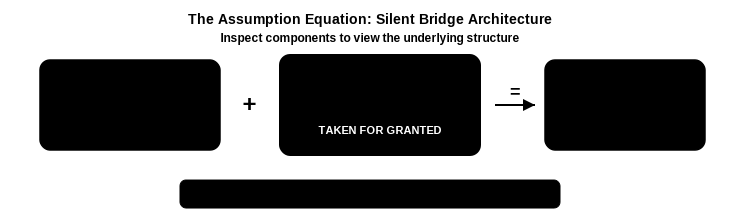
An assumption is an unstated, hidden premise that a speaker or writer takes for granted when making a statement. It is the silent bridge connecting the facts in the speaker's mind to the final statement they utter.
Statement = Stated Fact + Unstated Assumption
When evaluating a question, you are given a statement followed by two or more numbered assumptions. Your job is to determine whether each assumption is implicit (taken for granted / valid) or not implicit (not taken for granted / invalid).
1. Fundamentals of Statement and Assumption
The Core Difference: Assumption vs. Conclusion
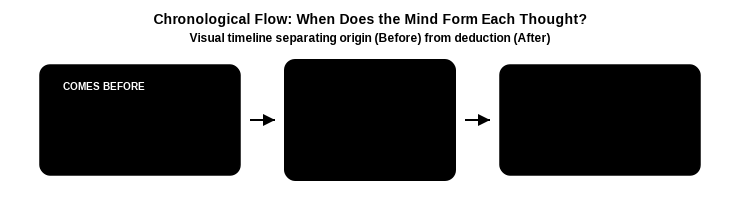
Many beginners confuse an assumption with a conclusion or an inference:
Assumption (Comes Before): This is the thought present in the speaker's mind before speaking. It explains why the person said what they said.
Conclusion / Inference (Comes After): This is what a listener derives or deduces after hearing the statement.
Example:
Statement: "Take an umbrella with you."
Assumption: It might rain, or the sun might be harsh (thought before speaking).
Conclusion: The speaker cares about your comfort (deduction made after listening).
Golden Rules to Test Assumptions
1. Adopt the Speaker's Perspective
Do not judge the statement from your personal worldview or general knowledge. Put yourself in the speaker's shoes and ask: "What must I believe to be true in order to make this exact statement?"
2. The Negation Test (The Ultimate Tool)
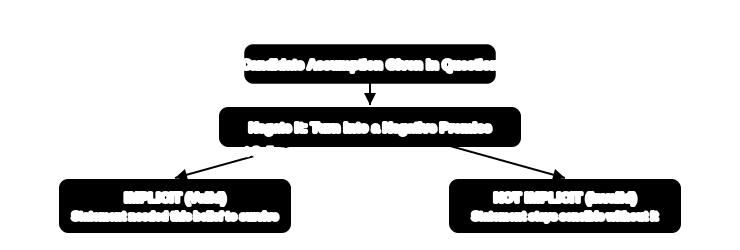
To test whether an assumption is valid, negate it (turn it into a negative statement).
If negating the assumption makes the original statement illogical, pointless, or meaningless, the assumption is implicit (valid).
If negating the assumption does not impact the original statement, the assumption is not implicit (invalid).
3. Watch Out for Extreme Words
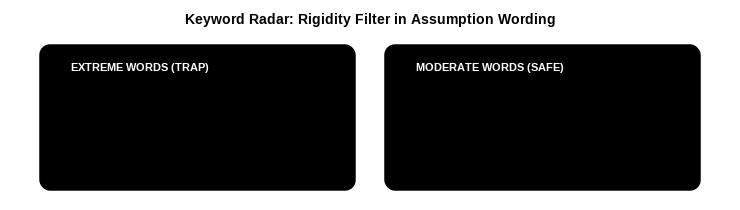
Assumptions containing rigid, extreme words are almost always invalid:
Extreme words: Only, all, every, never, none, best, definitely, completely.
Moderate words (often valid): Some, can, may, many, generally, perhaps, to an extent.
4. Avoid Far-Fetched and Out-of-Scope Logic
An assumption must stay strictly within the context of the statement. Do not add outside general knowledge, personal biases, or secondary layers of speculation that the author never implied.
5. A Restatement is Not an Assumption
If an option simply repeats the original statement using synonyms, it is an inference or a restatement, not an assumption.
2. Standard Types Used in Exam Books
Competitive reasoning books classify Statement and Assumption problems into four standard categories:
Advertisements, Notices, and Public Appeals
Advice, Suggestions, and Recommendations
Warnings, Prohibitions, and Cautionary Statements
Policies, Administrative Plans, and Remedial Actions
Type 1: Advertisements, Notices, and Public Appeals
The Core Logic: Whenever an organization or individual issues an advertisement, a public notice, or an appeal, they inherently take three things for granted:
People will read or see the message.
People will understand the message.
People will react positively or respond to the appeal.
Example 1.1: Statement: "Enroll in MasterClass Academy to crack the civil service exam on your first attempt."
• Assumption I: Students desire to crack the exam on their first attempt.
• Assumption II: MasterClass Academy provides coaching capable of helping students clear the exam.
Verdict: Both I and II are implicit.
Explanation: The academy creates the advertisement because they assume clearing the exam on the first attempt is an attractive goal for students (Assumption I). They also assume their institution can deliver that result; otherwise, making such a promise makes no sense (Assumption II).
Example 1.2: Statement: "Please switch off your mobile phones inside the hospital intensive care unit (ICU)."
• Assumption I: Visitors carrying mobile phones into the ICU can read the notice.
• Assumption II: Operating mobile phones inside the ICU can interfere with medical equipment or patients.
Verdict: Both I and II are implicit.
Explanation: Notices are posted under the belief that visitors can read and follow them (Assumption I). The underlying rationale for the prohibition is that active mobile signals cause interference or disturbance (Assumption II).
Example 1.3: Statement: "Donate generously to the Prime Minister's Relief Fund for flood-affected families."
• Assumption I: People have the financial capacity to donate.
• Assumption II: The collected funds will be utilized for flood-affected families.
Verdict: Both I and II are implicit.
Explanation: An appeal for money is made only when the author assumes people have money to spare (Assumption I) and that the funds will genuinely serve the stated relief work (Assumption II).
Example 1.4: Statement: "Buy Sparkle Toothpaste for the whitest teeth in just 7 days."
• Assumption I: People want whiter teeth.
• Assumption II: No other toothpaste in the market can whiten teeth in 7 days.
Verdict: Only I is implicit.
Explanation: The advertisement appeals to people's desire for bright teeth (Assumption I is implicit). However, the advertisement does not claim or assume that no other toothpaste exists that can do the same (Assumption II contains the extreme condition "No other" and is not implicit).
Example 1.5: Statement: "Commuters are requested to use the foot overbridge to cross railway tracks."
• Assumption I: Crossing tracks directly on foot carries a risk of accidents.
• Assumption II: Most commuters will ignore the foot overbridge.
Verdict: Only I is implicit.
Explanation: The administration built the bridge and put up the request because direct track crossing is dangerous (Assumption I). Assumption II directly contradicts the intent of the notice: authorities assume people will obey, not ignore it.
Type 2: Advice, Suggestions, and Recommendations
The Core Logic: When someone gives advice or a recommendation, they inherently assume:
The advice is feasible and practical.
The person receiving the advice is willing and able to follow it.
Following the advice will yield a positive or desired outcome.
Example 2.1: Statement: Doctor to patient: "Cut down your daily salt intake to keep your blood pressure stable."
• Assumption I: High salt consumption influences blood pressure.
• Assumption II: The patient has the ability to regulate their salt intake.
Verdict: Both I and II are implicit.
Explanation: Medical advice links cause to effect: the doctor assumes salt intake affects blood pressure (Assumption I). The doctor also assumes the patient can realistically control how much salt they eat (Assumption II).
Example 2.2: Statement: "You should analyze your mistakes from mock tests to improve your final score."
• Assumption I: Identifying past mistakes helps prevent repeating them in future tests.
• Assumption II: The person wants to improve their final score.
Verdict: Both I and II are implicit.
Explanation: The advisor assumes that review leads to correction (Assumption I) and that the person aims for a higher score (Assumption II).
Example 2.3: Statement: "To build long-term wealth, start investing early in low-cost index funds."
• Assumption I: Early investments in index funds generally generate wealth over the long term.
• Assumption II: Index funds are the only tool available for generating wealth.
Verdict: Only I is implicit.
Explanation: Recommending index funds assumes they are effective (Assumption I). Assumption II uses the restrictive word "only," which is invalid because the speaker never claimed alternative investment options do not exist.
Example 2.4: Statement: Manager to employee: "Take a 15-minute walk whenever you feel overwhelmed by screen fatigue."
• Assumption II: The employee is allowed or able to step away for 15 minutes.
Verdict: Both I and II are implicit.
Explanation: The manager assumes walking has a refreshing effect (Assumption I) and that stepping away for 15 minutes is practical in the work setup (Assumption II).
Example 2.5: Statement: "Consult an architect before beginning the renovation of this heritage property."
• Assumption II: Without an architect, the property will definitely collapse.
Verdict: Only I is implicit.
Explanation: The advice assumes professional guidance is valuable (Assumption I). Assumption II is an extreme claim ("definitely collapse") not warranted by simple advice to consult a professional.
Type 3: Warnings, Prohibitions, and Cautionary Statements
The Core Logic: When a warning is posted or uttered, the authority assumes:
If the warning were not there, people might perform the unsafe action.
People will read the warning and modify their behavior out of caution.
Ignoring the warning leads to dangerous or adverse outcomes.
Example 3.1: Statement: "Caution: Deep water ahead. Do not swim beyond this point."
• Assumption I: People might swim beyond that point in the absence of a warning.
• Assumption II: Swimming in deep water poses a life hazard.
Verdict: Both I and II are implicit.
Explanation: A warning is placed precisely because authorities believe people might venture into deep water unaware (Assumption I) and that deep water is unsafe (Assumption II).
Example 3.2: Statement: "Warning: Trespassers will be prosecuted under the law."
• Assumption I: People might enter private property unlawfully.
• Assumption II: Legal prosecution acts as a deterrent against unauthorized entry.
Verdict: Both I and II are implicit.
Explanation: Signs against trespassing are erected because unauthorized entry is a real possibility (Assumption I), and the threat of legal action deters violators (Assumption II).
Example 3.3: Statement: "Do not lean out of the running train window."
• Assumption I: Leaning out of a moving train can cause injury.
• Assumption II: Train windows must remain shut at all times during the journey.
Verdict: Only I is implicit.
Explanation: The cautionary message warns against leaning out because doing so invites danger from passing poles or trains (Assumption I). It does not assume windows should never be opened for ventilation (Assumption II is out of scope).
Example 3.4: Statement: "Keep all household cleaners and detergents out of the reach of young children."
• Assumption I: Young children are prone to ingesting or touching harmful liquids if left accessible.
• Assumption II: Household cleaning liquids contain substances toxic to human health.
Verdict: Both I and II are implicit.
Explanation: The parent or manufacturer issues this safety instruction because children do not recognize chemical hazards (Assumption I) and these cleaners are harmful (Assumption II).
Example 3.5: Statement: "Drive slowly: Sharp hairpin bend ahead."
• Assumption I: Driving at high speeds around hairpin bends can lead to accidents.
• Assumption II: Drivers on this road can read the sign and reduce their speed.
Verdict: Both I and II are implicit.
Explanation: Road signs assume high speed on sharp curves is risky (Assumption I) and that drivers are capable of reading and reacting to the warning (Assumption II).
Type 4: Policies, Administrative Plans, and Remedial Actions
The Core Logic: When a government, company, or institution implements a rule, policy, or project, they assume:
A clear problem exists that requires an intervention.
The proposed policy or action will eliminate, reduce, or manage that problem.
The administration possesses the financial and operational ability to execute the decision.
Example 4.1: Statement: "The municipal corporation decided to construct 50 new rainwater harvesting pits before the upcoming monsoon."
• Assumption I: Groundwater levels in the city need replenishment.
• Assumption II: The municipal corporation has the resources to construct the pits before the monsoon arrives.
Verdict: Both I and II are implicit.
Explanation: Any project is launched under the assumption that the goal is needed (Assumption I) and that completing it within the designated timeframe is feasible (Assumption II).
Example 4.2: Statement: "The government banned single-use plastic bags across the state to control drainage clogging."
• Assumption II: Banning them will help improve drainage flow.
Verdict: Both I and II are implicit.
Explanation: Remedial policy decisions rely on cause-and-effect: authorities assume plastic bags cause clogs (Assumption I) and removing them will alleviate the problem (Assumption II).
Example 4.3: Statement: "The university introduced mandatory internship programs for final-year students to enhance practical industry exposure."
• Assumption I: Final-year students currently lack sufficient practical exposure.
• Assumption II: Working as interns in industry environments provides practical experience.
Verdict: Both I and II are implicit.
Explanation: Making an intervention mandatory assumes there is a gap to be filled (Assumption I) and that internships are an effective way to fill that gap (Assumption II).
Example 4.4: Statement: "The bank installed biometric fingerprint scanners at all branch vaults to curb internal security breaches."
• Assumption I: Unauthorized personnel could previously gain access using passwords or keys alone.
• Assumption II: Biometric authentication provides tighter access control than traditional keys or codes.
Verdict: Both I and II are implicit.
Explanation: Upgrading security protocols assumes standard methods had vulnerabilities (Assumption I) and that biometrics offer superior protection (Assumption II).
Example 4.5: Statement: "The transport department increased penalties for riding without helmets from 100 rupees to 1,000 rupees."
• Assumption I: A 100-rupee fine was too low to deter traffic violators.
• Assumption II: Heavier fines will encourage more riders to wear helmets.
Verdict: Both I and II are implicit.
Explanation: When penalties are raised, the authority assumes the existing fine failed as an effective deterrent (Assumption I) and a 10-fold increase will compel compliance (Assumption II).
Ready to Test Your Speed?
Put your assumption identification skills and implicit judgment to the test with real exam drills.