In logical reasoning, a Statement presents an existing problem, situation, or real-world development, and a Course of Action is a measure, step, or administrative decision taken to address that situation.
The purpose of a valid course of action is to:
Solve the problem directly.
Reduce or minimize the severity of the problem.
Prevent future damage without creating a fresh crisis.
In competitive exams, questions provide a statement followed by two or three suggested courses of action. Your role is to think like a responsible administrator or decision-maker and judge whether each action logically follows.
The 5 Golden Rules Every Beginner Must Know
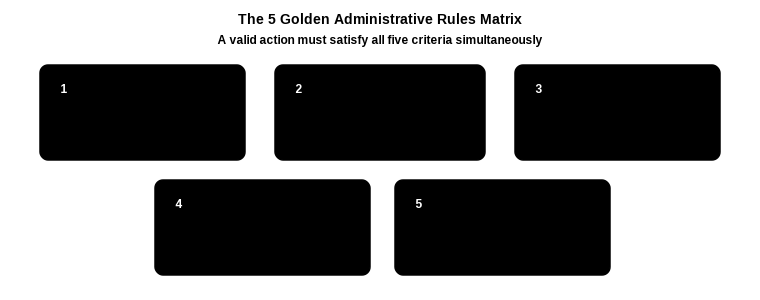
Every course of action must be tested against these five operational benchmarks before making a judgment:
1. Practical Feasibility (Is it realistic?)
An action must be practically implementable with available resources, technology, and legal powers. Any action requiring impossible technology, infinite funds, or unrealistic human behavior does not follow.
2. Proportionality (Avoid Extreme Measures)
The punishment or reaction must match the scale of the problem. Harsh, dictatorial, or extreme steps are almost always invalid.
Example: If two clerks in an office come late, firing the entire department is an extreme action and does not follow. Issuing a memo or docking pay for repeat offenders is proportionate.
3. Direct Relevance to Root Cause
The action must address the problem mentioned in the statement, not an imagined or related one. Do not introduce outside assumptions that aren't warranted by the given facts.
4. No New or Worse Problem
A valid course of action must not generate an even bigger problem than the one it tries to solve.
Example: Banning all private cars completely to reduce traffic congestion solves the jam, but halts the economy and paralyzes the public transit system. Therefore, it does not follow.
5. Constructive and Positive Approach
Escapist solutions (running away from the problem, passing the blame, or ignoring the issue) never follow. An action must show proactive, responsible problem-solving.
Standard Answer Options
For each problem, the options usually follow this pattern:
AOption A: Only Course of Action I follows
BOption B: Only Course of Action II follows
COption C: Either Course of Action I or II follows
DOption D: Neither Course of Action I nor II follows
EOption E: Both Course of Action I and II follow
Common Types of Courses of Action
Competitive exams categorize courses of action into three main operational types:
1. Corrective (Remedial) Actions
Steps taken during or immediately after a crisis to minimize loss, provide relief, and repair immediate damage.
2. Preventive (Precautionary) Actions
Measures taken in advance to prevent an anticipated threat, recurring hazard, or future failure.
3. Administrative and Policy Actions
Systematic changes, standard operating procedures, audits, or regulations designed to fix chronic operational inefficiency.
Type 1: Corrective (Remedial) Course of Action
These focus on fixing an active, immediate problem.
Example 1.1
Statement: Several residents in Ward 12 have been admitted to local clinics with acute stomach infections after drinking municipal tap water.
I.The municipal authority should immediately stop water supply from the affected line and supply clean drinking water via tankers.
II.The local clinics should refuse admission to new patients to prevent overcrowding.
Verdict: Only I follows.
Explanation: Action I provides immediate corrective relief and stops further contamination. Action II is inhumane, irresponsible, and worsens the crisis.
Example 1.2
Statement: A major fire broke out on the fourth floor of a busy commercial shopping complex on a Saturday afternoon.
I.Fire brigade and disaster management teams should be deployed immediately to evacuate trapped people and contain the blaze.
II.The government should immediately demolish all shopping complexes across the city.
Verdict: Only I follows.
Explanation: Action I is an urgent, necessary corrective response. Action II is disproportionate, extreme, and completely irrational.
Example 1.3
Statement: A large tree fell across the main arterial flyover during morning peak hours, completely halting traffic flow.
I.The traffic police should divert vehicles to alternative bypass routes immediately.
II.Civic emergency teams should be dispatched with cutting equipment to clear the debris from the flyover.
Verdict: Both I and II follow.
Explanation: Diverting traffic prevents secondary gridlocks (I), while clearing the fallen tree directly restores normal flow (II). Both actions are practical and corrective.
Example 1.4
Statement: The pass percentage of students in the annual secondary board exams of a state-run school dropped from 85% to 42% this year.
I.The education department should conduct a detailed enquiry into the reasons behind the sudden drop in performance and arrange remedial classes for weak students.
II.All students who failed should be permanently expelled from the school system.
Verdict: Only I follows.
Explanation: Action I identifies the underlying defects and works toward educational improvement. Action II is excessively punitive and defeats the purpose of public education.
Example 1.5
Statement: A severe derailment of a goods train damaged the main rail track, stranding several express passenger trains behind it.
I.Railway engineers should be mobilized immediately to clear the track and complete emergency repairs.
II.The railway administration should provide food, drinking water, and regular status updates to passengers aboard the stranded trains.
Verdict: Both I and II follow.
Explanation: Repairing the damaged infrastructure (I) fixes the technical problem, while passenger assistance (II) mitigates immediate distress.
Type 2: Preventive (Precautionary) Course of Action
These focus on mitigating expected risks, reducing recurring hazards, or stopping potential damage before it occurs.
Example 2.1
Statement: The Meteorological Department has issued a high alert warning of a severe cyclone hitting the coastal districts within 48 hours.
I.The administration should evacuate people residing in low-lying coastal areas to designated storm shelters.
II.Fishermen should be strictly advised and restricted from venturing into the sea until the alert is withdrawn.
Verdict: Both I and II follow.
Explanation: Both measures take advance precautions to safeguard human life before disaster strikes.
Example 2.2
Statement: A significant rise in online bank fraud and unauthorized OTP withdrawals has been reported by bank customers over the past six months.
I.Banks should run mass awareness campaigns instructing customers never to share OTPs, passwords, or personal credentials.
II.All commercial banks should shut down internet banking and mobile apps permanently.
Verdict: Only I follows.
Explanation: Educating the public (I) directly prevents common scam vectors. Shutting down digital banking (II) is an extreme, counterproductive step that paralyzes the financial system.
Example 2.3
Statement: A sharp bend on the national highway has witnessed frequent vehicle collisions at night due to poor lighting and lack of warning signs.
I.Highway authorities should install bright street lights, reflective cautionary signboards, and speed rumblers before the turn.
II.The highway should be completely closed to all traffic after 7:00 PM.
Verdict: Only I follows.
Explanation: Adding reflectors, lighting, and signs (I) removes the physical causes of the accidents. Closing an essential national highway at night (II) is disproportionate and disrupts commerce.
Example 2.4
Statement: Health officials warn that waterlogging during the upcoming monsoon season is likely to trigger a spike in dengue and malaria cases.
I.Municipal bodies should clean drainage networks, eliminate stagnant water puddles, and conduct regular anti-larval chemical fogging.
II.People should be instructed to keep water storage containers uncovered during rain.
Verdict: Only I follows.
Explanation: Action I removes mosquito breeding grounds. Action II advocates the exact opposite of medical safety guidelines and would worsen mosquito breeding.
Example 2.5
Statement: Data leaks from multiple private tech firms indicate that employees frequently fall prey to phishing emails sent by cybercriminals.
I.Companies should conduct mandatory cybersecurity training and implement simulated phishing tests for all staff members.
II.All internal and external email communication should be banned across corporations.
Verdict: Only I follows.
Explanation: Regular security drills and training (I) build workforce resilience. Banning email (II) destroys day-to-day business operations.
Type 3: Administrative and Policy Actions
These focus on structural improvements, regulatory compliance, performance audits, and long-term systemic fixes.
Example 3.1
Statement: Many government hospital doctors in rural clinics are reported to be routinely absent during working hours, leaving rural patients unattended.
I.The health department should implement biometric attendance systems and conduct surprise administrative inspections.
II.All rural clinics should be shut down and patients should be asked to travel to state capitals for minor treatments.
Verdict: Only I follows.
Explanation: Enforcing accountability through biometrics and inspections (I) fixes administrative non-compliance. Closing clinics (II) denies healthcare access to the rural public.
Example 3.2
Statement: The state road transport corporation has incurred heavy financial losses for the third consecutive year due to poor bus maintenance, frequent breakdowns, and ticketless travel.
I.The corporation should overhaul its bus maintenance schedule and deploy strict flying ticket-checking squads to curb fare evasion.
II.The ticket prices of all buses should be multiplied fivefold with immediate effect.
Verdict: Only I follows.
Explanation: Addressing maintenance and revenue leakage (I) targets the exact causes of loss. Multiplying fares fivefold (II) is unrealistic and would drive passengers away, causing deeper losses.
Example 3.3
Statement: Citizen grievance redressal portals show that applications for birth and death certificates take over three months to process against the statutory limit of 15 days.
I.The municipal administration should audit the bottlenecks in the application pipeline and fix individual accountability for delayed files.
II.The statutory time limit should be increased to six months so staff do not feel hurried.
Verdict: Only I follows.
Explanation: Identifying delays and enforcing accountability (I) solves administrative inertia. Increasing the time limit (II) normalizes inefficiency rather than improving service delivery.
Example 3.4
Statement: A preliminary audit revealed that substandard bitumen and aggregates were used in the construction of recently built municipal link roads that eroded after a single rain shower.
I.An inquiry committee should test the road samples, blacklist the responsible contractors, and initiate disciplinary action against negligent supervising engineers.
II.The municipal body should stop building all asphalt roads permanently.
Verdict: Only I follows.
Explanation: Holding contractors and engineers accountable (I) addresses fraud and negligence. Banning asphalt roads entirely (II) is an overreaction that halts municipal infrastructure work.
Example 3.5
Statement: High school dropout rates among female students in backward rural blocks have risen sharply due to long, unsafe walking distances to the nearest secondary school.
I.The state government should introduce dedicated, secure transport services or distribute bicycles to eligible female students.
II.Female students should be advised to terminate their education after primary school.
Verdict: Only I follows.
Explanation: Providing safe transport or bicycles (I) removes the physical barrier to attending school. Telling students to drop out (II) is regressive and defeats public policy objectives.
Key Takeaway for Solving Questions
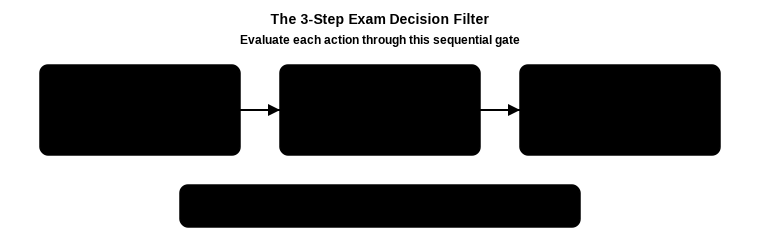
When reading the statement, ask yourself three questions before marking your option:
Does this action directly hit the source of the trouble?
Can this action be executed in the real world without excessive disruption?
Is this action balanced, fair, and free from overreaction?
If the answer to all three is yes, the course of action follows.
Ready to Test Your Speed?
Put your administrative evaluation skills and course of action rules to the test with real exam drills.